
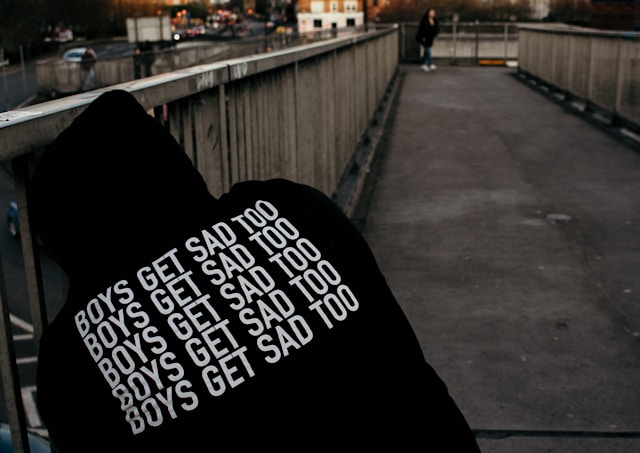
The month of November focuses on men’s mental health. I am John Lomax and a counsellor for The Wellness Consultancy and clinical hypnotist with a special interest in addiction issues due to my own personal life experiences. I do not wish to cause distress with this article but hope that by sharing information we can all reduce the stigma of talking about the sensitive subject of death by suicide and reduce the numbers of men who tragically die every year.
Men all over the UK will be growing moustaches (including me) to help raise awareness and start important conversations about men’s health and wellbeing. It’s about our physical health too.
Remember to keep doing your health checks. Look at this information on prostrate, testicular and breast health in men:
https://www.menshealthforum.org.uk/p-prostate
https://www.cancerresearchuk.org/about-cancer/testicular-cancer
breast cancer in men fact sheet | Breast Cancer UK
Male suicide – the hidden epidemic
The facts and statistics of male suicide are truly shocking. I am sure that many readers will identify with someone they know or from their own family that have unfortunately died due to suicide. I know I have. One of my close friends, Chris, who I knew since secondary school, who I first went abroad with, first went to Wembley with to see our football team play. I knew him for 50 years. Chris tragically died to suicide a few years ago and it left family and friends reeling from the shock and loss of Chris in our lives.
Let’s look at the UK statistics:
- In 2024, 5,717 men died due to suicide in the UK. This is a rise of 61 men from 2023
- Male suicide rate is 17.1% per 100,000
- Female suicide rate is 5.6% per 100,000
- The highest at risk group is men 50 to 54 years of age – 26.8% per 100,000
- Suicide is the biggest cause of death of all men under the age of 45
- Deprivation is a key factor and people living in the most parts of the UK have a higher risk of death by suicide. 14.9% per 100,000 of people will die in a deprived area
- Addiction issues such as alcohol or substance misuse are additional risk factors in suicide with 94% of completed suicides being linked to alcohol
- Living with chronic pain is also a high risk factor
Males are over 5 times more likely to die from suicide than women. However, I also lost my female friend Nancy to suicide. Globally the number of deaths due to suicide is twice that of all homicides.
Why do so many men die due to suicide? Research shows that mental illness is the most important factor in suicide. Around 80% of people who die due to suicide struggle with mental ill health and/or addiction. Researchers estimate that up to 60% of people who die due to suicide have major depression. Other reasons often cited are as financial issues/debt, relationship breakdown and social media. This list is not exhaustive, and multiple factors are often relevant in someone’s suicidal death.
Societal roles for men to ‘man up’ and be the ‘strong’ stereotype are so unhelpful to seeking help and sharing distress. Males are encouraged to be hard and tough, with a ‘big boys don’t cry’ attitude. Men are far less likely to ask for help compared to women. Men are often more reserved about showing emotions for fear of being seen as weak. Poor communication and reduced access to support networks are other relevant factors. The more violent means that men often use in suicide attempts make it more likely that first attempts will be fatal than women.
Men sadly tend to be less communicative than women and don’t share their struggles with friends or family. They may be generally more isolated. Many men are slower to access healthcare professionals generally. As many as 40% of men have never spoken about problems such as stress or anxiety. People often feel worried about being a burden, feel too embarrassed or believe they have learned to deal with it on their own.
What to do if worried about someone?
If you feel it’s appropriate encourage him to take some action. This is not about suggesting a fix to the problem or making things magically better. It is likely that the situation he is struggling with is not simple to fix and will not be solved today. Perhaps there are things that show that you care and are willing to help rather than having an absolute solution. This might be around trying to get more sleep, eating better or just asking if anything has helped them in the past. Offer to be there to listen again in the future and encourage to seek support from others as well as yourself to remove some of the shame and stigma of what they are feeling. Make sure you check in with him either on the phone or plan to meet in person in a week or so time. This shows that you understand that the issue does not need to be solved after your conversation and that you will continue your support.
This method of approaching a difficult conversation follows the acronym of ALEC to make it easier to remember the steps:
A – Ask the question
L – Listen and don’t judge
E – Encourage to seek help
C – Check in and continue to support
You can read more about the ALEC method on the Movember website and even practice some hypothetical situations to see how much you already know. https://uk.movember.com/men-s-health/spot-the-signs

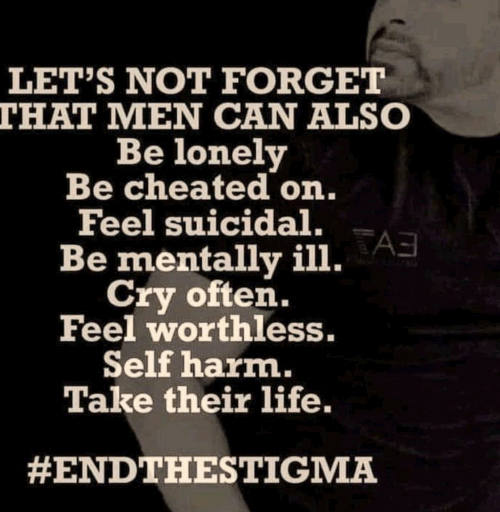
The best vaccination against suicide is having meaningful connections and a sense of purpose, developing hopefulness, resilience and exploring reasons for living. Empathy and compassion are qualities that we can all offer someone at a time of distress. Exploring their feelings with openness and no judgements or interruptions can enable someone to make sense of their distress. Don’t be afraid to offer a hug. We don’t need to be a doctor, psychiatrist or mental health worker. Just being a genuine human can make all the difference.
If someone is actively suicidal then offer support to contact their GP or out of hours service for an emergency appointment. Ask if they are already under the care of a mental health team who can be contacted for help. If not available attend A & E at your local hospital or call 999.
If someone has attempted suicide call 999 and stay with them until help arrives if you can. An overdose can be deceptive, and a person can look relatively ok and alert even though their organs may be fatally damaged if left without treatment.
Every suicide attempt should be treated seriously.
If someone is exploring thoughts of suicide with no plan or intent to end their life, encourage them to contact their GP for an appointment to explore their feelings and give them details of helplines that can provide a confidential way to express distress (Samaritans, Mates in Mind, Papyrus).
You may work with someone who is experiencing suicidal thoughts or mental health difficulties. There are many employers who have Employee Assistance helplines or referral to an Occupational Health service. If you are a unionised environment, please don’t forget your union also has dedicated mental health support. Lots of men struggle during times of relationship breakdown and this can be due to practical worries such as child maintenance payments or not being able to see their children. Accessing advocacy services to guide men through family issues from services such as Action for Fathers https://www.actionforfathers.co.uk/ with support from Home Start for Dads https://www.home-start.org.uk/dad-matters.
Let’s start having conversations that matter. Let’s bring bright minds and people together. I want to be honest I thought about suicide in my 20s. I was living in a bedsit, it was winter. I had a two-bar fire and I was cold. I was abusing alcohol and drugs. I was unemployed and alone. I could not see a way out. Suicide seemed like an appealing option. I know what it felt like to be in complete despair.
There are many organisations now offering help to men in the same place I was in many years ago. Andy’s Man’s Clubs, Pie Clubs (in the North East), Brothers through Boxing just to name a few in the North of England. Men’s groups are taking place in libraries, community clubs up and down the UK. Please reach out. You don’t need to grow a moustache in Movember but I will be.
John Lomax, Counsellor
Tel: 07759 457319
Help and support:
If you are interested in talking about your difficulties and feel the need for change in your life, The Wellness Consultancy can help. We have rooms in Bolton, Chorley and Anglesey and we work online. Andrea, John and Rachel are dedicated therapists who offer a safe space to explore your struggles.
Please reach out today email: wellness-consultancy@outlook.com
For further information:
Suicide Prevention Charity | Campaign Against Living Miserably (CALM)
Mates in Mind | Overview of our work | Mates in Mind
Samaritans, call 116 123, online chat, https://www.samaritans.org/how-we-can-help
National Suicide Prevention Helpline, https://www.spuk.org.uk/national-suicide-prevention-helpline-uk/
Papyrus HOPELINE, (for the under 35s) Papyrus HOPELINEUK on 0800 068 4141 (24 hours, 7 days a week), email pat@papyrus-uk.org or text 07786 209 697
Did you know that the Construction Industry has specific help too:
https://bandce.co.uk/the-charitable-trust/for-times-of-need/
Are you working in farming? Contact Yellow Wellies:
Farm Safety Foundation / Yellow Wellies – YellowWellies.org