
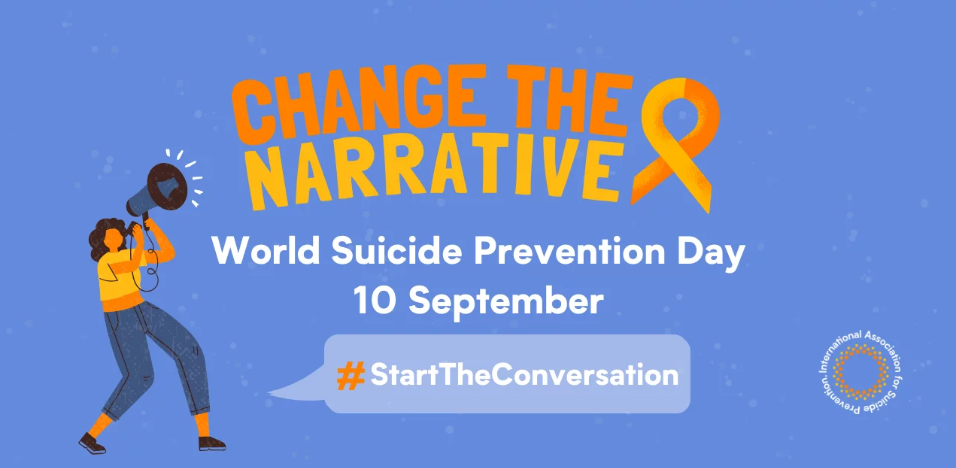
On Thursday 10th September it is World Suicide Prevention Day and the theme again this year is ‘Changing the narrative on suicide and so we would like to add to the conversation on this critical subject. One in four adults has had suicidal thoughts.
This is a difficult subject and I would like to reach out to anyone who maybe struggling, or to someone who is supporting someone with suicidal thoughts. We will be talking about suicide and what can help people who are feeling suicidal and those supporting them during suicide awareness month in September. Join in the World Health Organisation’s campaign in whatever you can by joining in on the conversation https://www.who.int/campaigns/world-suicide-prevention-day/2026
In the UK every day 18 people die by suicide however this figure may be higher as it can be difficult to determine the cause of death in some instances. For example, if someone is struggling with alcohol or substance misuse or has a serious physical health condition their death by not be recorded as suicidal. It is important there is an understanding of the factors which may increase the risk that someone may die from suicide. These include:
- Gender: menremainthe most at-risk group within the general population and are three times more likely to die by suicide than women. However, the rate of suicide by women aged under 24 has increased in 2021 to the highest level since 1981 and female nurses have a 23% higher rate of suicide than other women.
- Age: highest rate of suicide in men is between 50-54 years and women between 45-49 years.
- Bereavement: there is a higher risk of suicide following the death of a loved one especially if by suicide.
- Sexual orientation and gender identity: the risk of suicide is significantly higher among the lesbian, gay,bisexualand transgender community.
- Mental Illness,particularly depressionincreases the risk as someone’s resilience may be already lowered and they may feel hopelessness and despair.
- Social deprivation: including debt, financial insecurity, and domestic violence.
Whatever the statistics someone will complete a suicide when they feel there is no other option and normally feel overwhelmed by a complete sense of hopelessness and struggle to see a way forward.
What are the signs that someone may be feeling suicidal?
It’s important to watch out for signs of distress and changes in behaviour. If you know someone well, you can often tell if they are behaving in a way that may indicate serious distress. For example, they may be withdrawn, appear unusually dishevelled or change how they make financial or personal plans.
Can I ask someone if they’re feeling suicidal?
There is evidence that shows if you ask someone if they’re suicidal, it can help protect them. It’s ok to ask someone, “are you having suicidal thoughts?”. By asking directly about suicide, you give them permission to tell you how they feel and let them know they are not a burden. This can be a powerful way of communicating this isn’t a taboo subject.
What can I do if someone tells me they’re having suicidal thoughts?
If someone does tell you they are having suicidal thoughts, always take them seriously. Try to listen in an unhurried way without distractions. You don’t have to be able to solve their problems. The act of listening and being understanding will help. If you can, offer support and encourage them to talk about their feelings.
If you can, arrange to speak to them again at a specific time. This will show your ongoing support and will make them feel valued. It also gives them something to hold onto.
How can I be there for someone who’s feeling suicidal?
Simple actions can help you be there for someone who is experiencing suicidal thoughts or recovering from an attempt to take their own life. People who have felt suicidal will often say what a huge relief it was to be able to talk about what they were experiencing. The Samaritans has powerful examples on how speaking to someone about suicide can interrupt their suicidal thoughts and stop them acting. https://www.samaritans.org/support-us/campaign/world-suicide-prevention-day/
We know that talking therapy can be hugely beneficial to someone who is struggling, holding a safe, confidential space for someone to talk about their most darkest thoughts can be so empowering for them. It can also be a source of support in getting more specific help, providing a more holistic approach for example Mental Health Services, debt management.
Three leading factors that contribute to suicide are isolation, hopelessness/despair and feeling a burden.
Men can often be less likely to reach out for help and often feel socially isolated. Groups such as Andy’s Man’s Club all over the UK can provide a non-threatening and safe space to connect with other men https://andysmanclub.co.uk/groups/.
Some people find it helpful to do an MOT so things don’t build up and catch them by surprise.
Take a moment to reflect on where you at, check in with yourself, do a mental MOT.
Mental MOT – ask yourself these 10 questions:
- How are you feeling today, really? Physically and mentally.
- What’staking up most of your headspace right now?
- What was your last full meal, and have you been drinking enough water? Have you increased the intake or alcohol,substances or prescription medication?
- How have you been sleeping?
- What have you been doing for exercise?
- What did you do today that made you feel good?
- What’ssomething you can do today that would be good for you?
- What’ssomething you’re looking forward to in the next few days?
- What’ssomething you can do with someone else?
- What are you grateful for right now?
Consider how you answer these questions and what they are highlighting. You may be feeling a bit hopeless as if there is nothing to look forward to, stuck with a problem that isn’t within your control or struggling to look for a positive. This is time to reach out and chat to someone who can openly listen so you can help feel less isolated and may be look at something from a different perspective.
Sources of help
If you or someone you know is feeling low and you are concerned about your or their well-being but don’t feel at immediate risk, you can get help from your GP, ringing 111 but also by contacting agencies such as:
SHOUT 85258 text service for mental health support https://giveusashout.org/
Samaritans Tel: 116123 or email: jo@samaritans.org.uk
SOS Silence of Suicide, Tel: 0300 1020 505, https://silenceofsuicidesos.org.uk/
Papyrus (for under 35s) Tel: Hopeline 0800 0684141 https://www.papyrus-uk.org/help-me/im-feeling-suicidal-2
C.A.L.M Tel: 0800 585858, webchat and online: thecalmzone.net https://www.thecalmzone.net/what-we-do
https://andysmanclub.co.uk/groups/
If you are worried about a colleague, there may be help available from Occupational Health, Human Resources, Mental Health First Aiders, a union or an Employee Support Helpline/health insurance scheme
If you or someone you know is at immediate risk, you can call 999 or attend A&E for an urgent assessment. Supporting someone who is suicidal is hard for you. Rethink has great advice on this. Suicidal thoughts – How to support someone (rethink.org)
I hope that by sharing my experience that I will give someone the courage to reach out whether you are struggling yourself or watching a loved one suffer, we can help you.
Rachel Wesley
Trauma Psychotherapist, Clinical Supervisor and Wellbeing Trainer
Email: wellness-consultancy@outlook.com
Website: thewellnessconsultancy.org
Helpful links
https://www.thecalmzone.net/category/suicidal-thoughts
https://www.who.int/campaigns/world-suicide-prevention-day/2026